Ceramic Backing Solutions for Aluminium Welding Challenges
Understanding Ceramic Backing Solutions
What is Ceramic Backing for Welding?
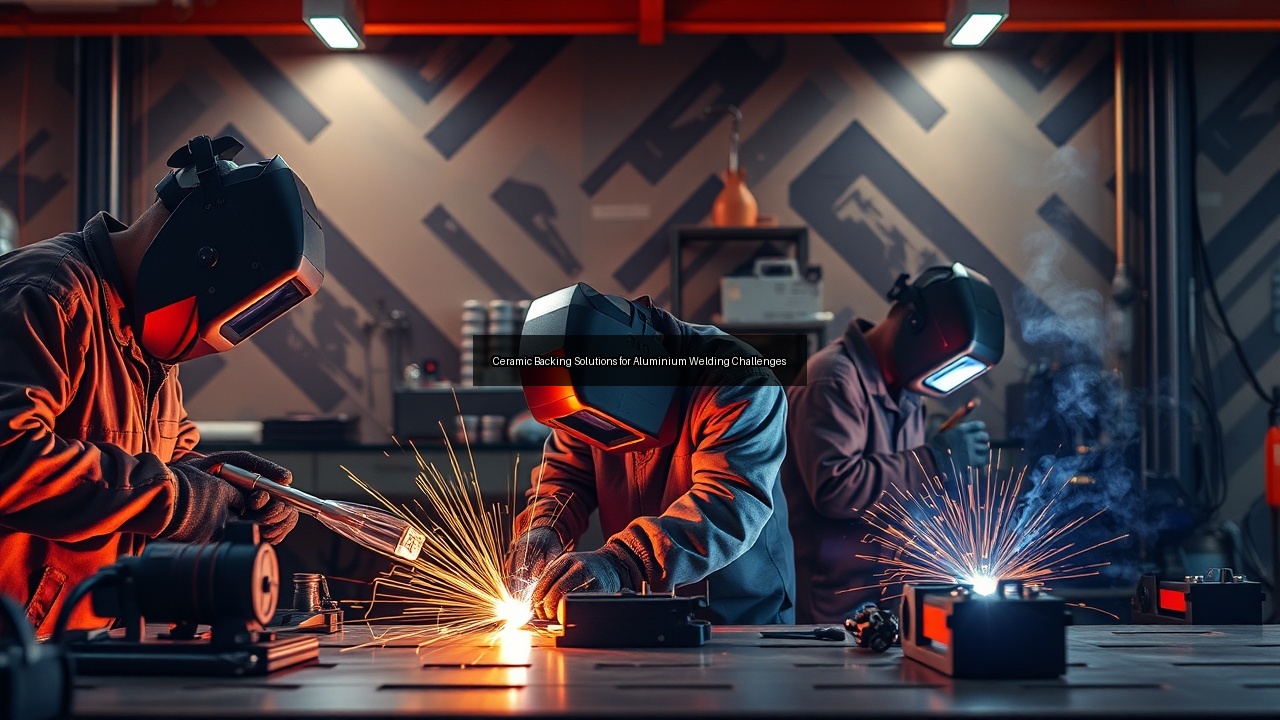
Ceramic backing for welding provides essential support during joint formation by placing durable ceramic tiles or strips behind the weld area. This setup contains the molten pool and prevents defects in aluminium joints where thin sections demand precise control. Welders position these materials to maintain consistent root reinforcement without additional grinding. The process integrates smoothly with various torch angles and joint geometries. Ceramic backing for welding stands out because it adheres temporarily with adhesive or fits into holders that allow easy removal after cooling. Professionals in marine fabrication rely on it to achieve clean, full-penetration welds on hull plates. Unlike temporary solutions, ceramic options withstand high heat without contaminating the aluminium surface. This method improves efficiency for both manual and semi-automated setups.
Benefits of Using Ceramic Backing Materials
Ceramic backing materials deliver multiple advantages that directly enhance weld quality and reduce post-processing time. They eliminate the need for back gouging on aluminium, saving hours per project while preserving material integrity. Welders achieve better control over penetration, resulting in stronger joints resistant to cracking under stress. These materials also minimize spatter and oxidation on the reverse side, which proves critical in visible marine components. By supporting the weld pool evenly, ceramic backing materials promote uniform bead profiles across varying thicknesses. Users report fewer repairs and improved productivity when switching from metal backing plates. The non-metallic nature avoids unwanted alloying with aluminium during high-temperature cycles. Overall, ceramic backing materials streamline workflows for fabricators handling complex geometries.
Common Applications in Aluminium Welding
Aluminium welding frequently occurs in marine construction, aerospace frames, and structural panels where lightweight strength matters most. Ceramic backing for welding excels here by enabling single-sided access on large assemblies like boat hulls or tank sections. Welders apply it during pipe joining or plate butt welds to maintain alignment without distortion. In automotive and transportation sectors, the solution supports thin-gauge aluminium sheets that require clean finishes. Plasma cutting teams also use ceramic backing materials to stabilize edges before final assembly. The approach works equally well for repair work on existing aluminium structures exposed to corrosion. Fabricators choose ceramic options because they adapt to curved surfaces and irregular geometries common in custom metalwork. This versatility makes ceramic backing for welding a staple across industries focused on aluminium performance.
Types of Ceramic Backing Materials
Overview of Ceramic Materials in Welding
Ceramic materials in welding come in various compositions designed to handle extreme temperatures and support molten metal effectively. Alumina-based ceramics offer high thermal resistance suitable for aluminium processes, while zirconia variants provide extra durability against thermal shock. These materials are formed into strips, rings, or custom shapes that fit specific joint configurations. Welders select ceramic materials based on thickness and expected heat input to prevent cracking in the backing itself. The non-conductive properties ensure no electrical interference during arc initiation. Many suppliers offer pre-glued versions with adhesive backing for quick installation on flat or contoured surfaces. Ceramic materials in welding maintain structural stability even when exposed to repeated heating cycles. Their inert nature protects the weld from atmospheric contamination during solidification.
Comparison of Ceramic Backings vs. Other Backing Materials
Ceramic backings outperform traditional metal or flux-based options in aluminium applications by avoiding contamination and reducing cleanup. Metal backing plates often require complete removal and can introduce unwanted elements into the weld, whereas ceramic backings leave minimal residue. Compared to adhesive-only tapes, ceramic solutions provide superior heat resistance and consistent support across larger areas. Welders note that ceramic backings handle higher amperage without degradation, unlike some flux materials that produce excessive fumes. Geometry compatibility also favors ceramics, as they conform better to irregular aluminium profiles than rigid metal alternatives. Cost analysis shows long-term savings through fewer defects and faster production rates. Ceramic backings maintain performance in both indoor shops and outdoor marine environments where other materials fail under variable conditions.
Features of Quality Ceramic Backing
Quality ceramic backing features precise dimensional tolerance, typically available in widths up to 102mm for broad joint coverage. High-density construction resists cracking under intense torch heat and supports consistent weld formation. Integrated adhesive layers allow secure placement without additional clamps, speeding setup for busy welders. Smooth surface finishes prevent the backing from marking or embedding into the aluminium weld root. Premium options include reinforced edges that withstand mechanical handling during large fabrications. Compatibility with automation systems ensures these materials perform reliably in mechanized welding cells. Quality ceramic backing also demonstrates low moisture absorption to avoid hydrogen-related issues in critical aluminium welds. These characteristics combine to deliver repeatable results across diverse welding projects.
Welding Techniques and Ceramic Backing
TIG Welding and Ceramic Backing
TIG welding benefits significantly from ceramic backing for welding because it demands exceptional control over heat input on aluminium. The backing supports the weld pool during slow travel speeds, allowing precise filler addition without burn-through. Welders position ceramic strips to maintain root gap consistency, which proves vital for thin-wall tubing or sheet metal assemblies. Protective gear such as welding helmets with proper shade selection complements the setup for safe operation. Ceramic backing enables single-sided TIG welds on complex aluminium geometries where access from both sides remains impractical. The material withstands the focused arc without introducing tungsten contamination. Many fabricators pair TIG processes with ceramic backing materials to achieve aerospace-grade finishes on structural components.
MIG and GMAW: Enhancing Weld Quality
MIG and GMAW processes gain efficiency when paired with ceramic backing for welding on aluminium structures. The backing contains the higher deposition rates typical of these methods, producing full-penetration welds without excessive heat buildup. Welders adjust wire speed and voltage while relying on ceramic materials to stabilize the pool and reduce undercut. This combination minimizes spatter on the reverse side, cutting cleanup time substantially. Ceramic backing materials also support consistent travel speeds in semi-automatic setups, improving overall weld uniformity. In production environments, the approach integrates well with push-pull torch systems for long seams. Fabricators report stronger joints and fewer porosity issues when using ceramic backing during MIG operations on marine-grade aluminium alloys.
Plasma Cutting Applications with Ceramic Backing
Plasma cutting teams apply ceramic backing materials to stabilize aluminium plates during edge preparation before welding. The backing prevents dross adhesion on the underside and maintains flatness for accurate fit-up. Welders then transition directly to joining operations with the same ceramic support in place. This dual-purpose use reduces material handling and ensures clean kerfs that promote better weld starts. Ceramic backing for welding handles the intense localized heat of plasma arcs without degradation. Applications in shipyard settings demonstrate how these materials improve cut quality on thick aluminium sections. Integration with laser-assisted marking further enhances precision in automated plasma lines.
Challenges Faced by Welders and Solutions
Common Aluminium Welding Challenges
Aluminium welding presents persistent issues including rapid heat dissipation, oxide layer formation, and susceptibility to distortion in thin sections. Welders often struggle with incomplete penetration on single-sided joints and porosity from hydrogen absorption. Joint geometry variations complicate consistent torch positioning, leading to defects that require rework. Marine applications add exposure to corrosive environments that demand flawless weld integrity. High thermal conductivity forces higher amperage settings, increasing burn-through risk without proper support. These challenges slow production and raise costs when traditional backing methods fail to contain the weld pool effectively.
How Ceramic Backing Addresses These Challenges
Ceramic backing for welding directly counters aluminium challenges by providing stable support that controls heat flow and prevents burn-through. The material maintains root reinforcement even on thin gauges, eliminating distortion common in unsupported joints. Its inert properties reduce oxide entrapment and porosity risks during solidification. Welders achieve better geometry control because ceramic backings conform to irregular surfaces without shifting under arc pressure. Adhesive versions secure placement quickly, allowing focus on torch technique rather than fixturing. This solution works across MIG, GMAW, and TIG processes to deliver consistent results in demanding marine fabrications. Reduced post-weld cleaning further streamlines workflows for professional welders.
Case Studies: Success Stories Using Ceramic Backing
Shipyard teams welding aluminium hull sections reported 40 percent faster completion rates after adopting ceramic backing materials from Gullco International. The KATBACK system integrated seamlessly with automated carriages, producing uniform welds on 102mm-wide joints without rework. Another project involving Voestalpine-supplied aluminium panels for offshore platforms showed zero porosity defects when ceramic backing supported GMAW operations. Welders noted improved safety through reduced grinding and better access in confined spaces. These cases highlight how ceramic backing for welding resolves real-world production bottlenecks in marine and structural applications. Fabricators continue to scale the approach across larger automation cells for sustained gains.
Future Trends in Welding and Automation
The Role of Automation in Welding Processes
Automation transforms welding by integrating ceramic backing for welding into mechanized systems that maintain precise torch paths and consistent pressure. Gullco equipment pairs with ceramic materials to enable continuous operation on long aluminium seams without manual adjustments. This reduces welder fatigue while improving repeatability in high-volume marine production. Automated setups monitor weld pool behavior through sensors and adjust parameters in real time. Ceramic backing materials support these systems by providing stable foundations that prevent misalignment during extended runs. The shift toward automation demands backing solutions that perform reliably under programmed conditions across diverse geometries.
Innovations in Ceramic Welding Technology
Recent advances in ceramic welding technology focus on enhanced thermal shock resistance and customizable adhesive formulations for faster application. New composite ceramics combine with traditional alumina to handle higher energy inputs from laser-hybrid processes. Manufacturers develop thinner profiles that fit tighter joint designs without sacrificing strength. These innovations expand ceramic backing for welding into emerging fields like additive manufacturing repairs on aluminium components. Integration with smart holders allows quick changes during automated cycles. Welders benefit from materials engineered specifically for GMAW and plasma cutting combinations that demand superior pool control.
Gullco and Voestalpine: Leading the Way in Welding Solutions
Gullco International and Voestalpine drive progress through specialized products like the KATBACK ceramic backing system optimized for aluminium welding. Their collaboration delivers solutions that combine durable ceramic materials with automated travel carriages for enhanced productivity. Fabricators gain access to tested combinations that address common challenges in marine and structural metalwork. These companies invest in protective gear compatibility and training resources that help welders adopt new techniques effectively. Continued development targets integration with emerging automation platforms and laser-assisted processes. Their leadership ensures ceramic backing for welding evolves alongside industry demands for quality and efficiency.